Today, I was reminded of some years ago when all of this was still so new. I had only recently stopped pushing a maths exercise book at my eldest son every morning, and perhaps I had just come across the term unschooling. There had been a lot of tension in my days as I oscillated between feeling delighted by everything on the one hand, and worrying if this was all enough on the other. Were we busy enough? Was I doing enough? Will they be enough? Sometimes I was able to sit with these thoughts until they landed in a calmer place. Other times, they were too triggering to me, and to soothe them I would unwittingly try to exert some control over my children’s activities, and attempt to shape it all in a way that made me feel less anxious.
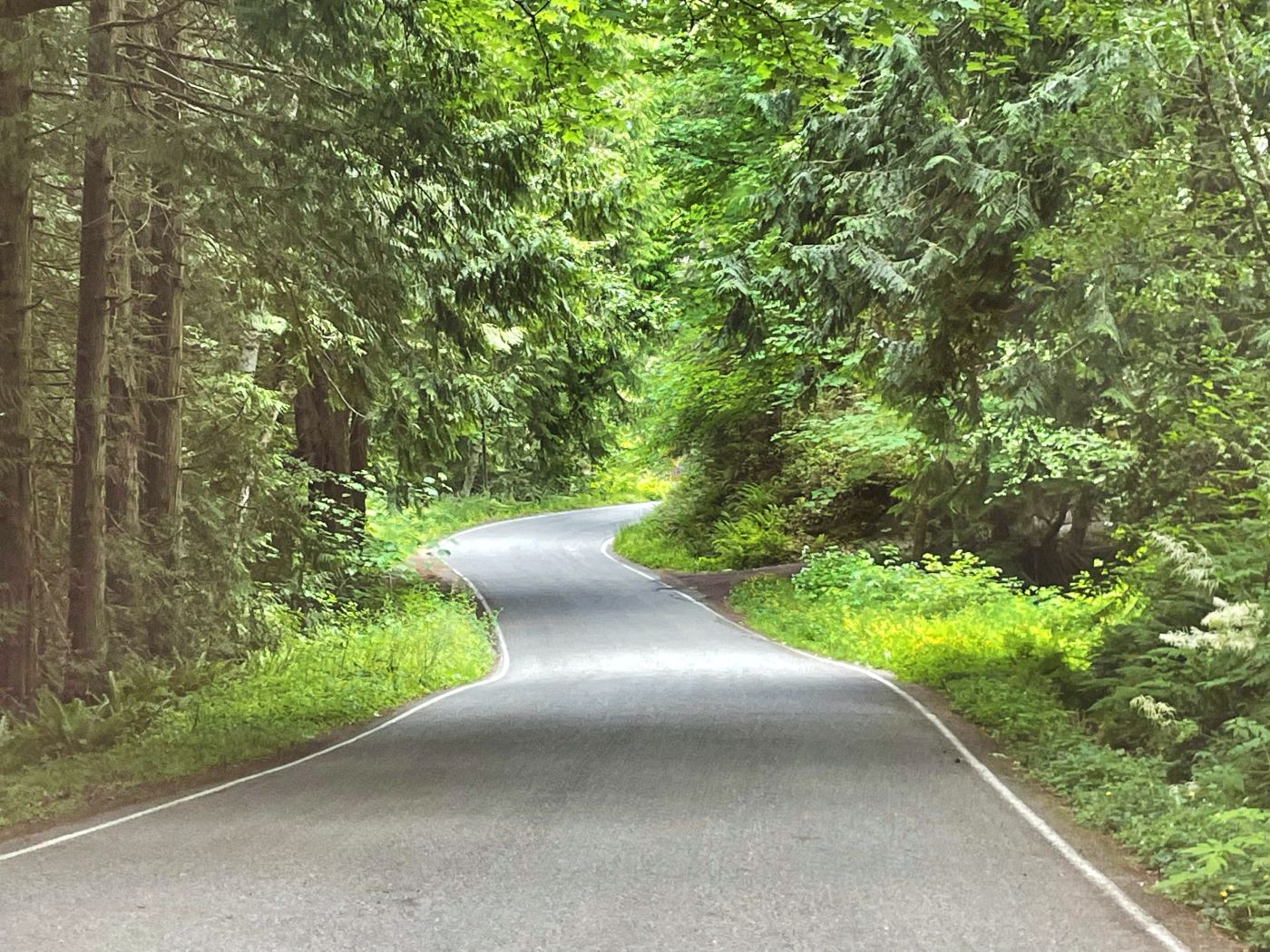
As I slowly relaxed into it, I started to discover that there is a lovely spaciousness that arises when you just let a day unfold without attempting to direct it. I had some experience of this in my own life through practising meditation, but until that point, I hadn’t really understood that this spaciousness could also exist in the context of how I accompanied my children. I marvelled at the meandering flow of these aimless days, in which I stopped questioning our enoughness and just enjoyed the journey. The children, I realised, were a beautiful example of presence. They just got on with whatever was meaningful or interesting to them in the moment. They were not concerned by where something would take them and they would not fill the present with fears of the future. In the absence of me cajoling, insisting or coercing anyone to a specific outcome, there was just the quiet intentionality of each person doing their thing. It was entirely unpredictable—things would stop and start, there would be boredom followed by intense busy-ness, I would be needed for something for a while, then not needed at all for some time. It took a lot for me to relax and follow the flow, not worrying where it would take us all. And, when I did relax, it felt like a quiet and deeply fulfilling place.
They’re older now, and their interests are more sophisticated, but today reminded me once more just how precious and rich it is to live in the present moment, aware of future possibilities but not overly attached to them. Unusually, everyone was home all day, but despite a full house, it still felt spacious. No external constraints, no things that should be done, just the freedom to follow whatever felt right in the moment. Shared jokes and videos, conversations on politics, travel, racism, horse riding, music, masculinity, a business idea. Cups of tea, some quiet moments, a shared lunch, the odd spark of irritation between siblings, saved just in time by a kind word or a deep breath. A guitar strummed in a corner. A trip to the shops with one. A walk up into the hills behind with another. So little and so much.
Mindfulness teaching refers to two states of mind in which we spend our days. In Doing mode, our mind looks at where we are and where we want to go, then focuses on the gap between and the best way to close this gap. Using our past memories and experiences to propel us into the future in the most efficient way possible, this is the mode to be in if you’re taking a journey, planning a project, shopping for groceries, or arranging an activity. It’s productive, focused and gets the job done.
In Being mode, we are connected to the present moment. We are calm and centred, and accepting of life just as it is, with no need to change things or strive forward. In this place, we’re curious and open to new experiences. We see the nuances, the richness, and the fullness of the moment, and there’s no gap between how things are and how we think they should be. We can recognise when we are in Being mode because our senses come alive, the noise in our brains quietens and we feel in touch with a deeper part of ourselves.
Both modes are perfectly valid and helpful to us. But, when we apply Doing mode to situations that don’t actually require any doing, we can easily come unstuck. This is when we create a scenario in our head, notice that we’re not there yet, and drive ourselves mad by ruminating and worrying about the gap. This is the point where, when we are new to this way of life and parenting, we are highly likely to sabotage the day.
Most of us do this a lot, because Doing mode is so celebrated in modern society. We’re encouraged to keep busy, to get good marks, to accomplish and strive. Our education system and much modern parenting advice are based on working hard for future results, and pushing for things to look like we need them to look. We are encouraged to never be satisfied. However, although it may outwardly seem like a logical way to live a life, Doing mode can be profoundly depleting and counter productive. With our eyes firmly set on some future goal, we have a tendency to be reactive, judging and self critical. We don’t exercise self-compassion, take time for activities that truly nourish us, or feel into our needs. We miss the beauty in everyday life—nature, connections with other people, all the little things that can fill our cup. When we burn out, we have typically allowed Doing mode to take over our lives.
Children are far more naturally in Being mode, as they haven’t been conditioned out of it. So, much of the initial deschooling struggle tends to come from a clash between these two modes. Parents can feel extremely challenged as they try to respect their children’s natural rhythms and autonomy, whilst battling their own conditioning and their deep fear of gaps that might need to be closed (maths, friendships, qualifications…). It’s generally easy to spot when we are doing this, not only by the worried thoughts, but also by how it all feels. Your child is happily engaged in some activity that you don’t entirely understand. Do you feel tense? Or do you feel relaxed? Are you worried that this is not enough? Or are you brimming with enoughness? Can you feel yourself judging your child? Or do you feel curiosity and connection? Does everything feel resistant? Or does it feel spacious?
In the early days, most of my knee-jerk reactions were associated with a fear around my children’s learning, and us not doing enough. But, interestingly, although our education system is Doing-focused, and driven by a continual striving for results, Doing mode is not conducive to learning. In this state, we are more likely to feel stressed and judgmental. We want to get to the end result as quickly as possible, so, rather than being open and curious, we adopt a kind of tunnel vision—we are far more focused on our goal than the journey itself. The joy of learning is easily extinguished by the chasing of a qualification or of approval. But, real, authentic learning is a journey. It’s a journey to be enjoyed and savoured. In Being mode, a child is relaxed, open and curious, delving into the things that are interesting to them and entirely focused on the journey.
Learning in this way takes on many guises. History in this house over the years has involved creating board games with historical characters, several years of tracking our family tree, watching Horrible Histories on repeat, day trips, an extensive coin collection, documentaries, YouTube channels, video games with a historical leaning, research into reenactment groups, and lots of conversation. There have been many books too, but (with the exception of an online history course that E took), no one has chosen to follow a history textbook. And, of course, this creative exploration of historical interests has naturally encompassed many other topics, such as politics, geography, linguistics etc. And all of these, in turn, have also branched off in many other ways, as they follow their curiosity. In fact, if learning for a fixed outcome is a straight line, learning for the love of the journey is more of an ever-expanding 3D puzzle in which dots are continually being joined in unexpected ways.
Perhaps the biggest discovery for me was that when I too relaxed into this, I got to really see my children. We are often so fixated with the gaps (particularly with a neurodivergent child or one that has struggled at school), that our perception is skewed. Encouraged by a gap-fixated society, we can easily end up with our eyes not on our child at all, but on all the things we would like to change, to improve, to make easier, to achieve. And here, we miss so much! We miss all the things they do love, all the things they’re curious about. If we are intent on them following a prescribed path through the world, we will miss the wonder of accompanying them as they move along on their own deeply personal paths. And these paths are far richer than anything we can imagine for them.
And so, these meandering days are a joy. I feel like my children lull me gently into Being mode through their focus on the present and what is genuinely meaningful to them. Their learning is deep and fulfilling, and over the years, they have soothed my triggers. The interests and passions that have space to percolate and develop are almost always entirely new to me, and on just about every topic they are specialists in, I am a total novice. By accepting that I cannot know more than them about where these journeys will lead, I get to see and enjoy them just as they are, each one with their unique interests, knowledge and expansive curiosity, moving through life in a way that feels aligned to them. The journey itself is the most important part of all of this. There are no gaps to fill. They are never behind, never failing, and always good enough.

 A PLACE ON A HILL
Leave a comment