If you knew nothing about unschooling, you might understandably assume that, liberated from the worries of exams, curriculums, and school meetings, unschooling parents are a carefree bunch, joyfully surrendering to the present moment and deeply connected to what makes themselves happy.
In fact, although living without school absolutely gives us the opportunity to live with far more freedom and agency, and ultimately far more happiness, it can take a long time indeed to get to that point. Until then, although everyone else may think it’s all playtime and dancing barefoot around campfires, you may be finding joy and ease surprisingly hard to grasp hold of. There are lots of reasons for this:
It all feels so weighty
Not sending your child to school can feel like a huge responsibility on your shoulders. Not only do you still need to keep your child loved, safe and healthy, but now it feels like you are wholly and solely responsible for every detail of their lives, from friendships and learning to getting out and about in the world. It can be hard to relax and feel into lightness when everything feels like such a massive deal, and there is so much fear of getting it wrong.
There’s no time
Research into hunter-gatherer communities consistently shows that in these communities children have many responsible adults in their lives, not just one or two. I will never believe that we are supposed to be doing this by ourselves, and I encourage parents to remind themselves of that when it all feels a bit overwhelming. So cut the mean self-talk and give yourself a hug for even attempting this huge task! When we are taking care of children, trying to keep the house together, working and dealing with all the other commitments of life, the sheer volume of things to do and organise can certainly make us feel like there is no time for us to explore what makes us happy.
We’ve given up the things that were just ours
If you have come to unschooling after your child has had a difficult time at school and/or is highly anxious then you are likely to have had to reduce or give up things in your life that made you feel happy and fulfilled to create the time and space needed for your child. I know many parents who have temporarily stepped away from careers they loved or who no longer have the time for the friendships and hobbies that fulfilled them. Even when this is a conscious and aligned decision it can also leave them feeling a bit lost.
We feel other people’s disapproval or lack of support
If this is the case for you, then rest assured that over time, you will come to the other side of this, far more empowered and confident, and with the right people around you. In the meantime, it is true that lack of support from others, feeling criticised or isolated can absolutely suck the joy out of the day.
All of the above are entirely understandable reasons for feeling like your joy must be put on hold for now. But here’s the thing: when we unschool, how we are really matters! In fact, it is so important that if you chose to forget about everything else and focus only on your own happiness for the next few weeks, it could well be the most generous thing you ever do for your family. Here’s why:
How we are has a huge impact on our children
This can feel like a lot of pressure, but it’s also a beautiful opportunity. If you imagine yourself holding space for your child, it is inevitable that how you are and the energy you bring affects that space. When you feel grounded, joyful, and aligned with your own values and needs, it creates a ripple effect and the space you hold will feel inviting, light and relaxed for your child. Held in this space, your child is more likely to be able to connect with their own curiosity and the things that make them happy. If you are on edge, feeling dissatisfied or not attending to your own needs, the space will feel less reassuring to your child. Our own anxieties and worries can feel like covert demands on our children, and accidentally fire up their fight or flight systems. This doesn’t mean that you must be cheerful all the time, but when you’re genuinely resourced and connected to yourself and what makes you happy, life will flow far more easily, (and for anyone particularly worried about learning, never forget that the main prerequisite for a natural learning state of mind is a relaxed nervous system).
You are always modelling
Children learn through what we do far more than through what we say. If they see us constantly self-sacrificing, silencing our own needs, or putting ourselves last, it sends a strong message that this is how we believe life should be lived. On the flip side, if they see us caring for ourselves, making time for the things we love, and honouring our needs, they internalise that it’s okay to do the same. Do we want them to place importance on their happiness as adults? Then that’s what we need to model.
We all matter!
For me, one of the core tenets of unschooling is that we all matter equally, and that we all have the right to exercise agency over our own lives. None of us can show up as our full selves if we are dismissing our needs and happiness as unimportant. If we believe this to be true for our child, then we have to believe it for ourselves too.
Finding your joy
Although you may be aware of bigger shifts you’d like to make in your life, tending to your happiness may well be more about the smaller moments.
1. Be intentional
Start to pay attention to how you feel and to acknowledge that it really matters. Be intentional about giving yourself permission to feel happy. You might want to ponder the reasons for any resistance you have.
2. Remember what lights you up
Take a few quiet moments to reflect: What did you used to love doing before life got so busy or felt so intense? Dancing, painting, journaling, hiking, gardening, seeing friends, listening to music you love – what makes you happy?
3. Create moments of joy
Once you’ve identified a few joyful things, see if you can incorporate them into your day. Even five or ten minutes of something nourishing or fun can shift how things feel. Notice any ripples out to your children when you intentionally choose to feel happy.
4. Make space for your needs
Unschooling is about meeting everyone’s needs, not just our children’s. Maybe you need to make some small changes to create more space for you. It might mean looking for support—from a partner or a friend, it might mean setting boundaries around your time, or examining why you feel guilty for taking time for yourself. This isn’t necessarily easy but consider it a work in process.
5. Watch your self-talk
Oftentimes in unschooling, the only obstacle between us and joy is the voice in our heads, telling us that we need to do more, that we need to worry about the future, that things might go wrong etc etc. Listen out for this voice, be compassionate with it, but don’t be scared to challenge it. A good question to ask yourself is “Is that really true?”
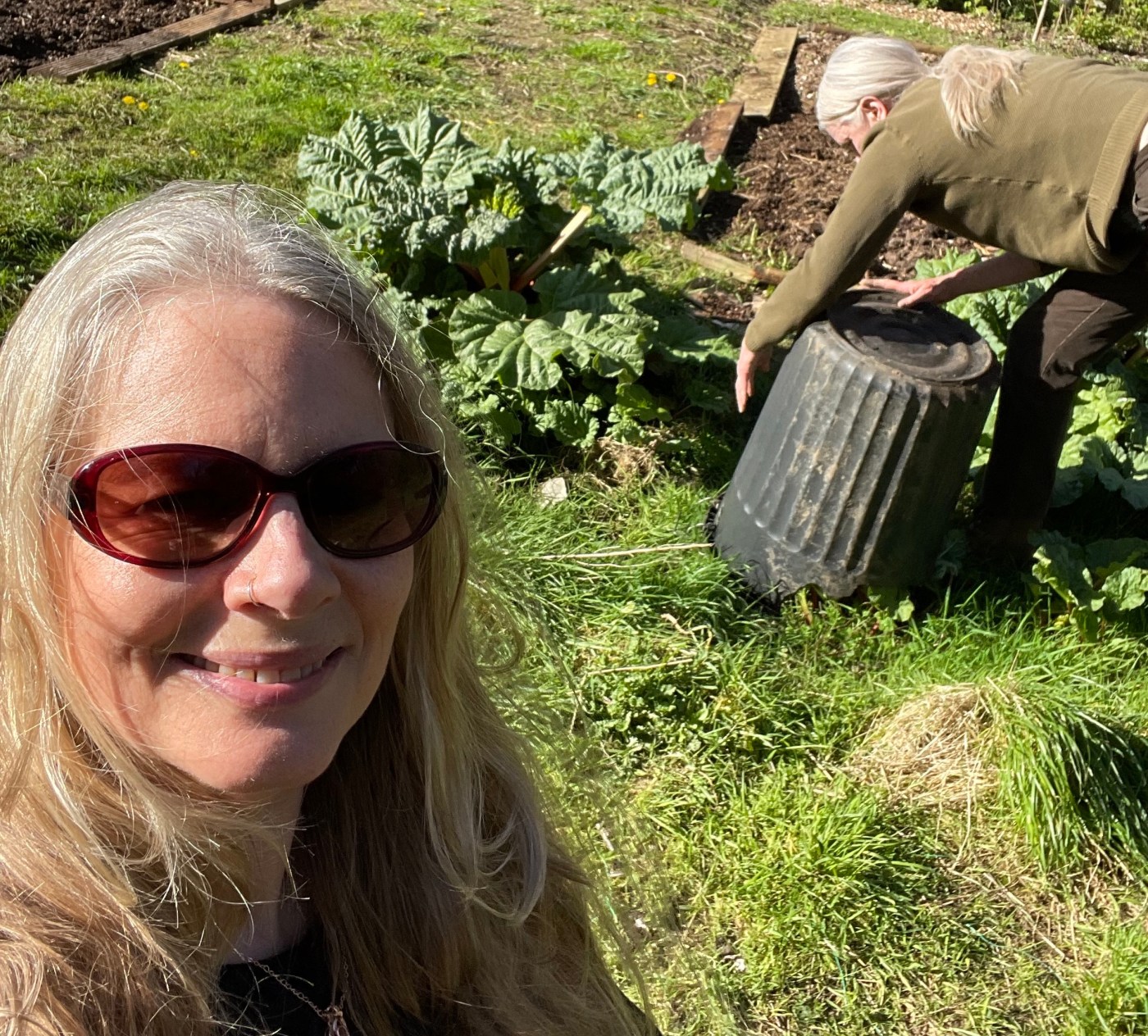
Above is a photo of myself with my good friend Nicola tending our allotment. On a few occasions, when life has become busy for us both, we have wondered if we need to give it up. But it makes us happy, and keeps us feeling resourced and grounded, and that ripples out to those we hold space for. And so, each time we have pondered whether we really have time for it, we have come to the same conclusion. The answer is not to give up the allotment. The answer is to make more space for it.

 A PLACE ON A HILL
Leave a comment